
Getting a backlink is not enough on its own. Where the link appears, what surrounds it, and how closely the referring content relates to the destination all affect its relevance and usefulness.
That is why understanding how to get contextual backlinks requires more than finding websites willing to add a URL. The goal is to earn references that fit naturally within relevant content and give readers a genuine reason to visit the linked page.
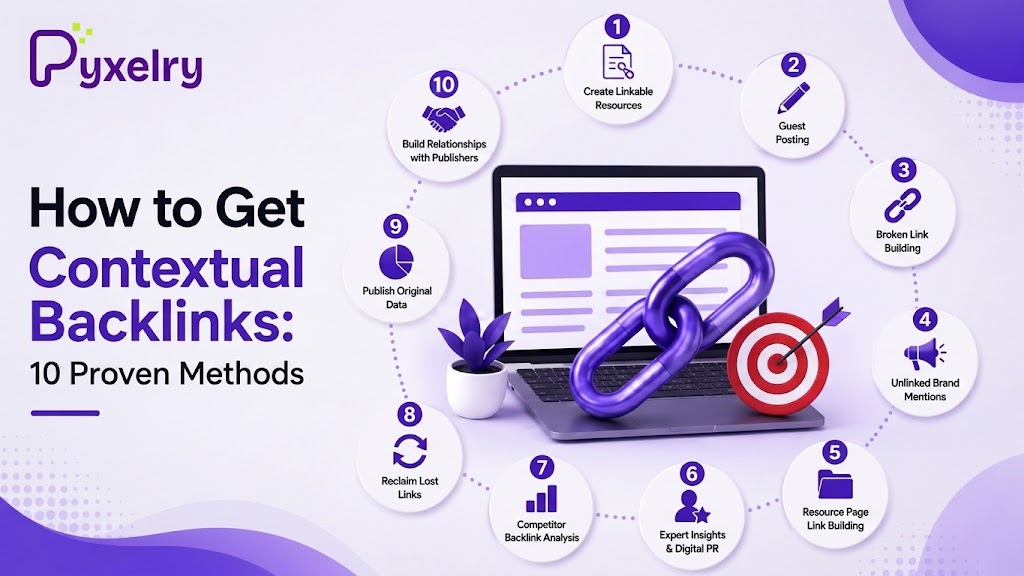
How to Get Contextual Backlinks: 10 Proven Methods
There is no single shortcut to earning strong editorial placements. These ten methods can help create genuine opportunities for relevant websites to reference your content.
1. Create Linkable Resources
Publish something worth referencing rather than another generic blog post. Original research, detailed guides, templates, tools, and visual resources can give writers a legitimate reason to link to your website.
Look for recurring questions or information gaps within your industry and create a resource that answers them better.
2. Contribute Guest Content
Guest posting works best when the publication and audience are genuinely relevant to your expertise.
Instead of pitching a link, pitch a useful topic. Your resource can then be included naturally where it adds additional context or supports a specific point.
3. Find Broken Link Opportunities
Older articles often contain links to resources that no longer exist.
Find a broken external link on a relevant page and check whether you have—or can create—a resource that serves the same purpose.
Broken Resource → Relevant Replacement → Helpful Outreach
The replacement should genuinely match the original context rather than simply being a convenient page to promote.
4. Reclaim Unlinked Brand Mentions
Your company, research, product, or original content may already be mentioned on other websites without a link.
These opportunities are valuable because the editorial connection already exists. A short message asking the publisher to link to the original source can help readers find the information being referenced.
5. Target Relevant Resource Pages
Resource pages can be useful when they actively curate guides, tools, research, or educational content related to your topic.
Before reaching out, check three things:
- Is the audience relevant?
- Does the page appear to be editorially maintained?
- Does your resource genuinely improve the collection?
If the answer is yes to all three, the placement may be worth pursuing.
6. Provide Expert Insights
Journalists and industry writers often need expert commentary, examples, or data.
Instead of leading with a backlink request, contribute something useful: an informed opinion, original data point, practical example, or industry insight.
The goal is to become a source worth referencing. When your contribution genuinely improves the article, a contextual citation becomes a natural possibility.
7. Analyze Competitor Backlinks
Competitor backlink analysis can reveal websites that already link to content similar to yours.
The important question is not simply, “Can I get a link from this website too?”
Ask why the publisher linked to your competitor. Was it because of original research, a useful guide, or a specific tool? Understanding that reason can help you create a stronger alternative or identify similar opportunities.
8. Recover Lost Links
Links can disappear when publishers update articles, restructure websites, or remove outdated resources.
Monitor lost backlinks and investigate what changed. If your content is still relevant—or can be improved—you may be able to contact the publisher and suggest restoring or updating the reference.
9. Publish Original Data
Writers regularly need statistics and evidence to support their content. Original surveys, studies, industry benchmarks, and case-study findings can turn your website into a source others want to cite.
Make important findings easy to understand by presenting clear statistics, summaries, and visual data.
10. Build Relationships With Publishers
One successful placement can be useful. A relationship with a relevant editor, journalist, or publisher can create opportunities over time.
Engage with people in your industry, contribute useful insights, and offer value before asking for anything.
Useful contribution first → Relationship → Relevant opportunity
This approach makes outreach feel less transactional and creates stronger long-term connections.
How to Evaluate a Contextual Backlink Opportunity
Not every link inside an article is worth pursuing. Before investing time in outreach, evaluate the actual website and backlink opportunity.
| What to Check | What Good Looks Like |
|---|---|
| Topical Relevance | The website and article clearly relate to your subject |
| Editorial Quality | Useful, well-maintained content created for a real audience |
| Surrounding Context | The paragraph clearly explains why your resource is relevant |
| Link Patterns | External links are selective and contextually appropriate |
A simple test can help: Would a reader genuinely benefit from clicking this link? Understanding why contextual backlinks still matter for SEO can also help answer that question. If the answer is unclear, the placement may not be worth pursuing.
Keep Outreach Focused on Value
A strong outreach message starts with the publisher’s content rather than your own website.
First, identify a relevant article. Then find a genuine gap, outdated reference, or point where your resource adds useful information.
The process is simple:
Relevant Article → Useful Resource → Natural Placement → Concise Outreach
Mention the specific page or section, explain why your resource is relevant, and avoid making the request sound like a transaction.
Common Mistake: Sending the same generic outreach template to every website. Contextual backlinks depend on relevance, so the outreach should reflect that relevance too.
Final Thoughts
Learning how to get contextual backlinks is less about collecting as many links as possible and more about giving relevant websites a genuine reason to reference your content.
Guest contributions, broken links, original research, expert insights, and publisher relationships can all create valuable opportunities. The key is to focus on relevance, editorial value, and natural placement.
When the destination genuinely improves the referring content, contextual backlinks can become a meaningful part of a well-rounded SEO strategy rather than simply links created for SEO.