
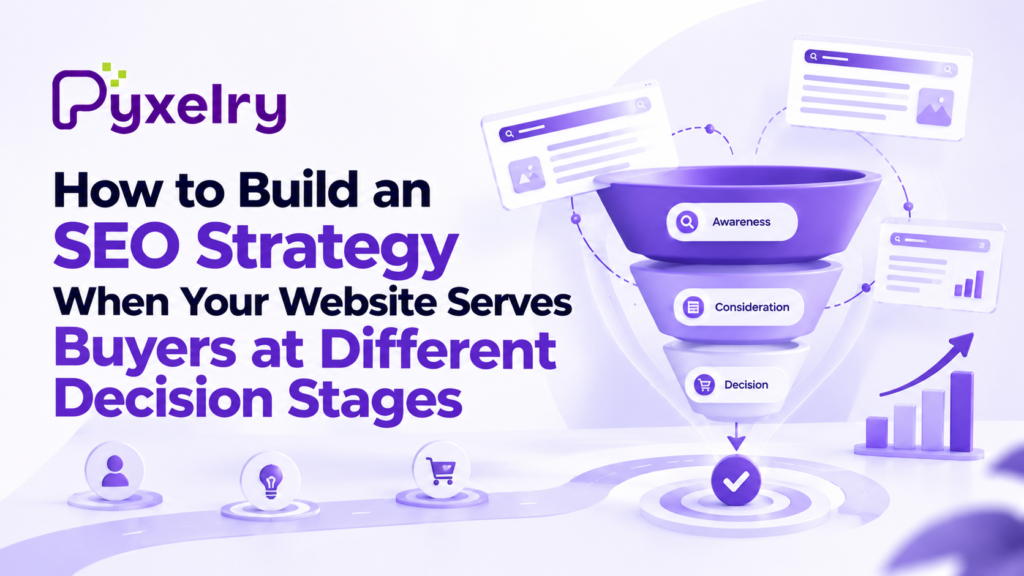
Every search query reflects a specific need, but not every searcher is ready to buy. A visitor looking for an explanation of a problem requires very different information than someone actively comparing service providers. Designing a comprehensive SEO strategy for different buyer stages ensures that your website attracts prospective customers early, guides them through their evaluation process, and provides the clarity needed to convert them.
Search Intent Across the Decision Journey
Search intent evolves as buyers move from recognizing an issue to choosing a solution. In the early stages, users seek clarity. They use broad, educational search queries to understand symptoms, define challenges, or explore general concepts.
As buyers transition to evaluating solutions, their search queries become more specific. They search for broad solution categories, tool types, software methodologies, or professional service models. Finally, decision-ready searchers look for direct validation. They query brand names, pricing details, implementation timelines, and head-to-head comparisons to reduce risk before committing.
While frameworks often depict this as a neat funnel, actual search behavior is rarely linear. Buyers jump between stages, revisit earlier questions, or jump straight to commercial queries. An effective content architecture supports this fluid behavior rather than forcing users into a rigid sequence.
Mapping Keywords and Content Formats
To cover the entire journey, map keyword types to specific content formats:
- Awareness Stage: Target broad informational keywords (e.g., “why is website traffic dropping”). Address these queries using comprehensive blog posts, ultimate guides, or explanatory articles that answer fundamental questions clearly.
- Consideration Stage: Target commercial investigation terms (e.g., “technical SEO audit vs content refresh”). Provide structured content like comparison guides, downloadable checklists, buyer guides, and detailed category pages to help users assess options.
- Decision Stage: Target high-intent transactional keywords (e.g., “enterprise SEO services pricing”). Use dedicated service pages, product feature pages, case studies, and FAQ sections that remove friction and answer common sales objections.
To prioritize effectively, balance your team’s available resources against immediate business goals. Conducting thorough search intent analysis during planning allows marketing teams to determine whether to focus on fast revenue generation by optimizing decision-stage service pages first or expanding a top-of-funnel educational library for broader reach.
Structuring Pages and Linking Naturally
Service and product pages should remain focused on commercial value. They need to address core offerings, key features, tangible deliverables, pricing models, and clear trust signals without getting bogged down in basic definitions.
Keep foundational educational topics on separate blog pages. To guide visitors toward commercial pages, establish strategic internal linking. Contextual links should feel natural to the reader, using descriptive anchor text that logically leads from problem-focused articles to practical solutions.
For example, an educational post explaining “how to identify website crawling errors” can naturally link to a commercial page detailing “professional site audit services.” This approach satisfies the reader’s current need while providing a clear path forward if they decide to seek professional assistance.
Avoiding Intent Overlap and Finding Content Gaps
A common mistake in an SEO strategy for different buyer stages is creating multiple pages that target identical search intent. When two articles address the same query in the same way, search engines struggle to determine which page to rank, diluting your visibility. Structuring pages according to clear content architecture standards
prevents cannibalization and helps spot hidden content gaps across the site.
To prevent cannibalization and spot content gaps:
- Map every existing page to a distinct primary search query and target intent stage.
- Consolidate overlapping blog posts into a single, comprehensive asset.
- Review top-performing competitor sites to identify unanswered questions or missing stage-specific topics.
- Update underperforming content with clearer answers, fresher examples, or better visual structures.
Measuring Performance Across Each Stage
Because user goals differ at each phase of the journey, evaluating every page with conversion metrics alone creates a misleading picture of performance. Track metrics tailored to the specific role each page plays:
| Stage | Primary Goal | Key Metrics to Track |
| Awareness | Discovery & Reach | Organic impressions, new session volume, scroll depth |
| Consideration | Engagement & Nurturing | Time on page, pages per session, resource downloads |
| Decision | Conversion & Action | Form submissions, consultation requests, conversion rate |
Evaluating your pages against stage-appropriate metrics ensures you judge top-of-funnel content on its ability to build brand visibility while holding decision-stage pages accountable for lead generation.
Building a Balanced Strategy
A successful SEO strategy for different buyer stages meets users wherever they enter your website. By aligning keyword mapping, content formats, and internal links with real search intent, you build a sustainable search presence that educates early-stage visitors and converts decision-ready buyers.