
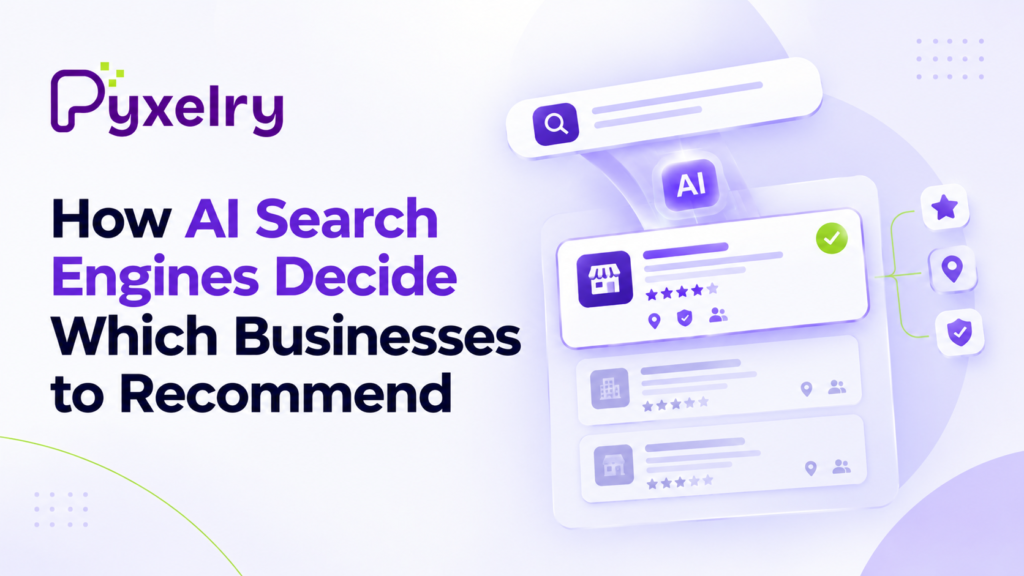
People increasingly ask conversational questions online, such as which company offers a specialized service, which local business suits their immediate needs, or which provider has relevant industry expertise. Instead of simply returning a list of blue links, modern search systems interpret these prompts and identify businesses that appear relevant to the user’s specific requirements. Because these platforms generate synthesized answers, understanding how they evaluate and surface companies is essential. While there is no single formula, several core elements influence AI search ranking.
Understanding the User’s Intent
Every recommendation begins with interpretation. The wording of a user’s question including the requested service, location, budget constraints, industry, and contextual requirements shapes what the system looks for. A query for an enterprise-level consultant requires different considerations than a request for a quick, local residential repair service.
Business Information and Entity Understanding
To recommend a business, AI systems must first understand what the business actually is and does. Clear, consistent information about a company’s core services, areas of expertise, location, and legal identity helps search systems build an accurate profile of the entity.
Website Content and Topical Relevance
A website remains a primary reference point for detailed information. Detailed service pages, useful explanations, clear business descriptions, and content that directly answers customer questions provide the granular context search systems need to match a business to a complex query. Aligning your structural content flow with machine discovery principles improves overall AI site readability across answer engines.
Third-Party Mentions and References
Independent verification matters. Credible industry publications, independent reviews, professional directories, and relevant external websites contribute additional context about a business. However, more mentions do not automatically translate to better visibility; the context, relevance, and credibility of the source carry significant weight.
Reviews and Reputation
Customer experiences help describe a business’s real-world reputation. Review content, sentiment, and consistency across relevant platforms give search systems clues about service quality, though review quantity alone never dictates recommendations.
Local Relevance and Business Profiles
When a user searches for local recommendations, location accuracy becomes vital. Precise service areas, current opening hours, and active business profiles help ensure a company is considered for geographic-specific queries.
Structured Data and Crawlable Information
Clean technical execution helps. Accurate structured data and accessible website content make it easier for systems to parse business details. However, schema markup merely clarifies information it does not guarantee inclusion in an AI-generated answer.
Relevance, Credibility, and Supporting Evidence
An organization’s stated expertise should be backed by substance. Search systems evaluate whether claims are supported by useful content, demonstrated experience, and credible information rather than keyword-heavy descriptions.
How Businesses Can Improve Their Chances
While visibility cannot be forced, companies can take practical steps to align with how systems interpret information:
- Maintain consistent and accurate business details across the web.
- Build thorough, informative service pages that address customer needs.
- Earn genuine editorial mentions in relevant industry publications.
- Collect authentic customer reviews and feedback.
- Keep local business profiles active and up to date.
Why AI Recommendations Can Vary
Results shift depending on the specific phrasing of a question, user location, available sources, the chosen search platform, and ongoing updates to system behavior. A business appearing in one answer is not guaranteed to appear in another.
A Realistic Comparison
Consider two local marketing agencies. Agency A maintains vague service descriptions, mismatched phone numbers across directories, and sparse website content. Agency B clearly outlines its specific consulting capabilities, publishes in-depth guides answering common client questions, maintains accurate profile data, and is referenced in reputable industry roundups. While neither agency is guaranteed placement, Agency B provides the clear context and strong relevance that AI search systems require to understand and recommend a business. For a broader perspective on how modern discovery engines operate, explore this guide on popular AI search tools and their recommendation models.
Conclusion
Ultimately, businesses can improve their discoverability by making their identity, services, expertise, and credibility easy for systems to understand. Because AI search ranking remains dynamic and variable, focusing on clarity, trust, and genuine value is the most resilient path forward.