Outsourcing outreach and placement gives your agency or freelancing business the capacity to scale without hiring a full in-house team. However, handing over execution carries real risks. If a provider delivers low-quality or manipulative links, your agency bears the burden of explaining those choices to your clients. Selecting a white-label link building partner requires more than evaluating price tags or selecting the vendor promising the largest quantity of backlinks.
Criteria for Evaluating Link-Building Partners
1. Understand Their Link-Building Methods
Before committing, inspect how a potential partner acquires placements. Look for genuine publisher outreach, contextual placements within relevant content, and transparent practices. Avoid vendors that use vague language, rely on automated link networks, or disguise private blog networks (PBNs) as real editorial placements. Steer clear of any provider promising guaranteed search rankings, as search algorithms regularly shift.
2. Evaluate Website and Page Quality
Third-party metrics like Domain Authority (DA) or Domain Rating (DR) can easily be manipulated. Assess sites manually by checking:
- Topical relevance: Does the host site align with your client’s industry?
- Organic traffic: Is the host receiving real organic traffic from search engines?
- Content standards: Is the content well-written and aimed at actual human readers?
- Outbound links: Does the site link out excessively to unrelated commercial sites?
A high metric score alone does not prove a site is safe or beneficial for a client’s link profile.
3. Check Niche Relevance and Placement Options
Different client accounts require tailored strategies. Check whether your agency partner for scalable outreach programs can secure placements across distinct sectors, such as B2B, e-commerce, or specialized services. A reliable provider offers various formats such as guest posts, editorial insertions, or digital PR rather than forcing every client into identical, generic link types.
4. Demand Transparency and Verifiable Reporting
Deliverables should be easy to inspect. Useful delivery reports must detail:
- Live URL and destination URL
- Referring website and linking page context
- Anchor text and indexation status
Always verify delivered URLs to confirm that pages remain indexed and follow agreed link attributes.
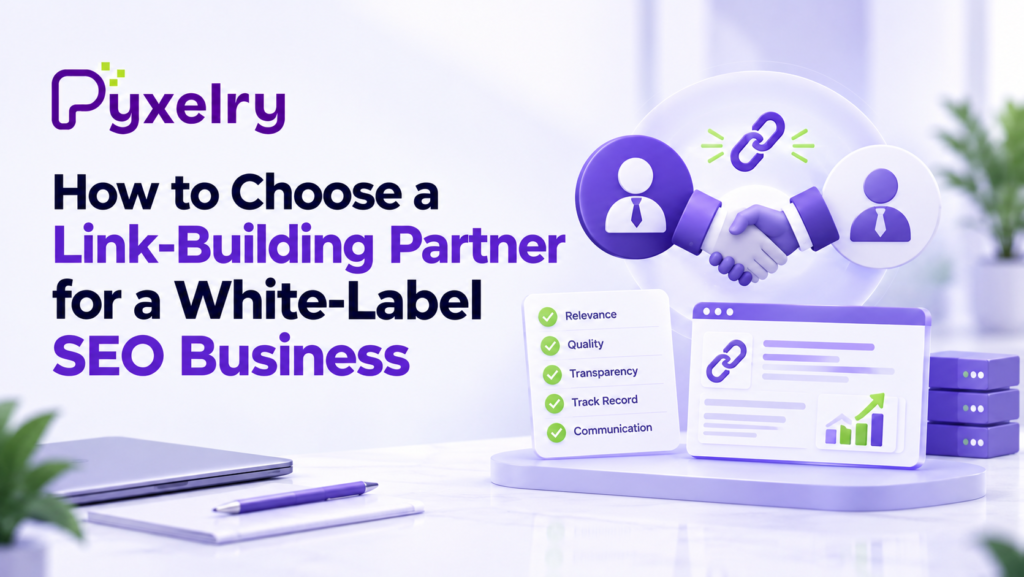
Quick Vetting Checklist:
[ ] Manual outreach process (no PBNs or link farms)
[ ] Real organic traffic verified on host sites
[ ] Contextual placement within relevant content
[ ] Unbranded reports with live target URLs
[ ] Clear link replacement and loss policies
5. Assess Communication and Turnaround Times
Consistent fulfillment relies on responsive communication. Evaluate how quickly a partner responds to questions and whether they provide realistic timelines for outreach. An honest partner who communicates delays in advance is far more valuable than one making unrealistic turnaround promises just to secure an initial order.
6. Understand Pricing, Policies, and Guarantees
Analyze pricing in terms of the manual work required and placement quality rather than choosing solely on cost. Reviewing outreach fulfillment standards before making financial commitments ensures that deliverables justify their price tag. Clarify important policies before signing:
- Link-loss policies: Will the partner replace links that drop within 6 to 12 months?
- Refund conditions: What happens if a placement cannot be secured?
- Content standards: Who writes the accompanying articles, and what quality standards apply?
7. Protect Client Relationships and Confidentiality
A true white-label link building partner operates strictly in the background. Ensure they sign a non-disclosure agreement (NDA) protecting client ownership and sensitive data. The provider should never contact your end-clients directly or include their own branding on client-facing deliverables.
Practical Example: Evaluating Two Potential Partners
Imagine your agency is comparing two providers for a client account:
- Provider A offers 20 links per month at a low cost. They provide a simple spreadsheet with minimal metrics, brief summaries, and limited information on how sites were selected.
- Provider B offers 6 links per month at a higher price per placement. They provide unbranded live reports showing niche-relevant host sites, real organic traffic trends, contextual placements, and clear replacement policies.
While Provider A appears more cost-effective on paper, Provider B offers safer, contextually appropriate placements that protect client trust and search performance over time.
Test Before Scaling
Before handing over major client accounts, run a small pilot campaign with a potential white-label link building partner. Aligning your QA process with standardized evaluation protocols helps you test their workflow on a limited scope reviewing placement quality, reporting accuracy, communication speed, and adherence to agreed guidelines before committing to larger budgets.
Core Takeaway
Selecting the right partner comes down to finding a provider that values quality over volume. Focus on partners offering transparent methods, contextually relevant placements, clear communication, and unbranded reporting that safeguard your agency’s reputation.