
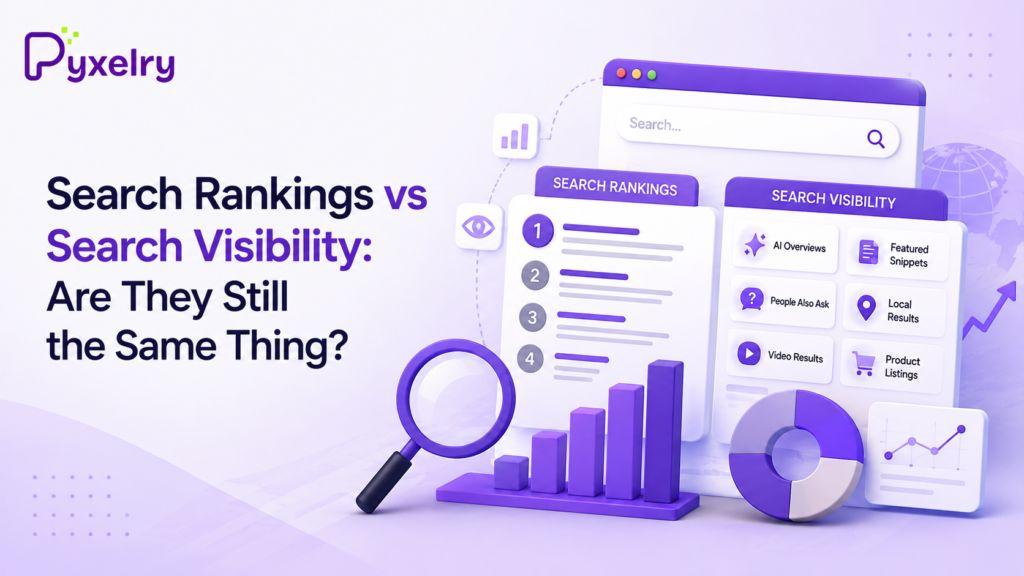
For years, measuring search success was simple. You picked a list of target keywords, tracked where your website ranked on the search engine results page, and celebrated whenever a page landed in the top spot. A number-one ranking was considered the ultimate goal because it directly correlated with organic clicks and traffic.
Today, the search landscape looks much more complex. While securing strong position numbers remains valuable, a high ranking for a specific term does not automatically guarantee that your business dominates the overall conversation. Modern search experiences have evolved far beyond a plain list of ten blue links, making search visibility a much broader concept than traditional ranking positions.
What Search Rankings Actually Tell You
A search ranking represents the specific position your webpage occupies for a single query at a precise moment in time. Being near the top of organic results still carries clear advantages. Higher positions generally command better click-through rates, build immediate credibility, and capture high-intent traffic from users actively looking for direct solutions.
However, a single ranking position offers only a narrow snapshot of your performance. Rankings fluctuate based on user location, search history, device type, and continuous algorithmic updates. More importantly, focusing entirely on ranking positions overlooks how drastically the interface of modern search engines has changed.
Why Search Visibility Is Broader
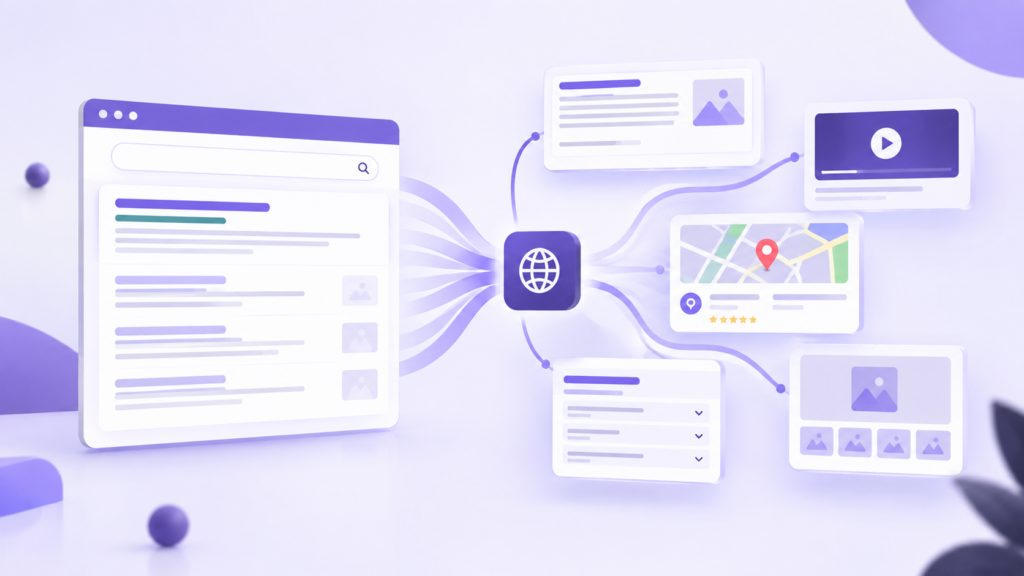
Search visibility measures your brand’s total presence across the entire search ecosystem rather than your placement on a single list. Today, a user might discover your business without ever clicking a standard organic link.
Modern search engine results pages incorporate a wide variety of formats that shape discovery:
- Featured Snippets & Direct Answers: Concise blocks of text that answer user questions at the top of the page.
- AI-Generated Summaries: Synthesized answers that cite relevant sources and direct users to detailed guides.
- Local Map Packs: Business listings that showcase local services, reviews, and contact details for location-based queries.
- Visual & Video Carousels: Media blocks that catch the eye of visual researchers.
- People Also Ask & Knowledge Panels: Dynamic accordion lists and brand summaries that capture secondary intent.
Investing in comprehensive modern SEO services helps businesses optimize for these diverse entry points, ensuring their brand stays present across the features where their audience gathers information.
Rankings and Visibility Are Connected, But Not Identical
It helps to think of search rankings as individual assets within a larger portfolio. A top position for a high-volume keyword certainly contributes to your overall reach, but it represents only one component of your online presence.
This broader shift is also explored in Google search visibility, where the changing search experience is discussed in more detail. Conversely, a website might rank in position four or five organically but earn widespread exposure by appearing in a featured snippet, a local map block, and a video preview simultaneously. Strong rankings feed into overall visibility, but visibility reflects your cumulative digital footprint.
What Businesses Should Measure
To get an accurate picture of search performance, organizations must look past single-keyword tracking and monitor metrics that reflect broader audience exposure:
- Total Organic Impressions: A recent SEO analysis of search performance shows why impressions, clicks, and average position can tell very different stories about how content performs.
- Search Feature Coverage: The frequency with which your content earns featured snippets, local placements, or visual elements.
- Branded Search Volume: Growth in the number of users searching directly for your business name or core products.
- Traffic Intent & Engagement: How long visitors stay, how many pages they view, and whether they complete meaningful actions on your site.
How SEO Strategy Is Changing
Adapting to broad visibility requires moving past simple keyword optimization. A broader SEO approach focuses on establishing clear topical authority across entire subjects rather than optimizing pages for isolated phrases.
This means building solid technical foundations, publishing thoroughly researched content that solves real problems, and maintaining consistent brand information across online directories, reviews, and industry platforms. When search systems recognize your brand as a helpful, authoritative source, your overall footprint grows across multiple query types and interactive features.
Conclusion
Search rankings are far from obsolete they remain a vital benchmark for evaluating how individual pages perform. However, tracking positions alone provides an incomplete view of market presence. By focusing on overall search visibility, businesses gain a clearer understanding of how effectively they are being discovered across the entire modern search landscape.