
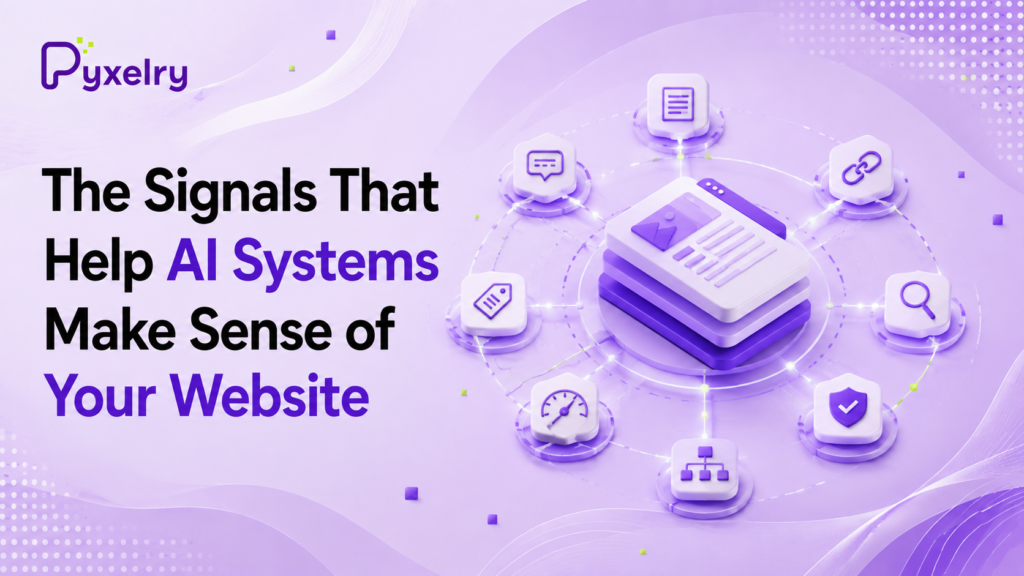
Search engines, crawlers, and AI-powered systems process websites differently from human visitors. A person can quickly understand a brand through design, images, and overall presentation. Automated systems rely more on the information they can identify, the structure surrounding it, and the relationships between different pages.
That does not mean every system reads a website in exactly the same way. Different technologies can use different methods to process content. However, clear information and logical organization generally make it easier to understand what a website covers and how its pages connect.
Start With a Clear Purpose
Every important page should make its purpose obvious. If a website relies heavily on vague marketing language, it can become difficult to determine exactly what the business offers or what a particular page is trying to explain.
Clear descriptions do not require repeating the same keyword throughout the content. The goal is simply to provide enough context for the main subject to be understood naturally.
Page structure also plays an important role. A clear H1 introduces the primary topic, while supporting headings help organize related ideas. Focused paragraphs make those ideas easier to separate and understand.
When content, headings, and page purpose support one another, they create stronger AI website signals that help automated systems build a clearer picture of the information available.
Show How Pages and Topics Connect
A website should not feel like a collection of unrelated URLs. The connections between pages help establish how individual topics fit into the wider website.
Internal links are useful because they create paths between related information. This is one reason what makes a website easy for AI to understand often depends on how clearly its important pages and supporting topics connect to one another. A broad service page can then lead naturally to detailed articles, explanations, or related resources.
Generic phrases such as “click here” tell very little about the destination. A descriptive link gives both users and automated systems a clearer indication of what they will find next.
This does not mean every page should link to everything else. The strongest connections are usually those that genuinely help explain or expand the topic already being discussed.
Use Structure to Add Context
Visible content is not the only source of information on a website. Structure can provide additional clues about how information is organized.
Headings, navigation, URLs, and other technical elements can help establish relationships between pages and sections. Structured data can also provide standardized information about certain entities, such as organizations, articles, products, or services.
Structured data alone does not guarantee rankings or AI visibility. Its role is to make specific information more explicit when it accurately reflects the visible content.
The important thing is consistency. The information presented through structured elements should support the same understanding created by the page itself.
Comparing Clear and Confusing Signals
| Signal | Clear Website | Confusing Website |
|---|---|---|
| Page structure | Logical headings and focused sections. | Flat content with vague sections. |
| Internal links | Related pages connected naturally. | Important pages left isolated. |
| Core information | Consistent descriptions across pages. | Conflicting or outdated details. |
| Topical context | Related ideas explained with useful depth. | Repeated keywords with little context. |
A clear website creates a more complete picture of its subject matter. When pages, topics, and important details support one another, the overall information becomes easier to interpret.
Keep Important Information Consistent
Consistency matters because websites often contain information across many different pages. Service descriptions, business details, and core topics should not unexpectedly change from one section of the website to another.
This is especially important when older pages remain online. Outdated descriptions or conflicting details can create unnecessary confusion and make it harder to understand which information represents the current version of the business.
Consistency does not mean using identical wording everywhere. Different pages can discuss the same subject from different angles while still presenting a coherent picture.
External Context Can Add Another Layer
A website is not always understood in complete isolation. Depending on the system, external references and mentions may provide additional context about a business or topic.
Relevant third-party references can help reinforce how a company, service, or area of expertise is discussed across the wider web. However, not every mention carries the same value. Context and relevance remain important.
The goal is not to collect mentions simply for the sake of having them. A smaller number of meaningful references is more useful than a large collection of unrelated ones.
Avoid Sending Mixed Signals
Some websites become difficult to interpret because their information does not form a consistent picture. Common problems include:
- Different pages describing the same service in conflicting ways.
- Important content left disconnected from related pages.
- Repeating keywords without explaining the broader topic.
- Leaving outdated information alongside newer details.
These issues do not automatically make a website invisible, but they can create unnecessary ambiguity.
Conclusion
There is no single hidden signal that makes every AI system understand a website perfectly. Different technologies can process content, structure, and context in different ways.
The stronger approach is to focus on clarity. Useful content, logical organization, meaningful internal connections, and consistent information work together to create AI website signals that are easier for automated systems to interpret.
A website does not need to be designed around one specific AI platform. It simply needs to communicate clearly enough that its purpose, topics, and relationships make sense across the different systems that may encounter it.